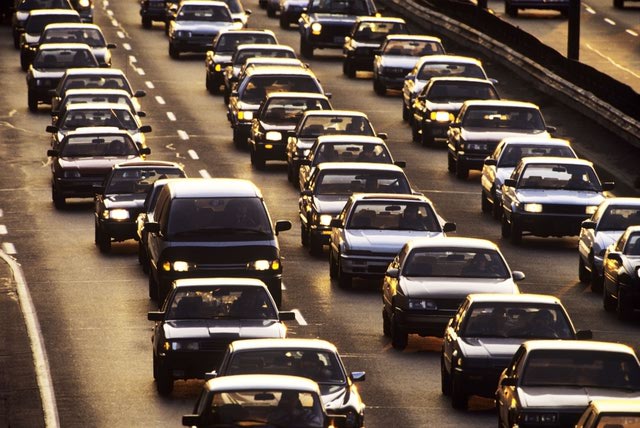
In my last article about Driving in the Nation’s Capital, I poked fun at the various things we Washingtonians have come to love, hate, or accept. After having the opportunity to drive in major cities worldwide, I have concluded that our traffic problem is not due to congestion, road construction, or even the full moon. We are victims of our habits and “it’s all about me” attitude. The one maneuver that is responsible for the majority of the traffic problems is a maneuver I call “closing the gap.”
Growing up in the West, wide-open spaces and roads go on forever. As kids, we never thought about the hours spent in a car. In the West, the streets go on in a straight line forever. You could go faster, but the speed increase didn’t gain much. A moderate increase in speed gained you some time savings. Still, anything more than that increased risk and reduced fuel economy. Given this fact, most drivers were contemptuous of putting on cruise control and just enjoyed the radio as they rolled out the miles.
Herein lies the problem with driving in D.C. Most drivers have no experience with driving along at a constant speed—they have become victims of closing the gap. In simple terms, we drive by relative distance and not by speed. As long as we are 10 feet from the car in front of us, speed doesn’t really matter. If the car in front of us goes slower, we slow down; if the car speeds up, we simply catch up or close the gap.
Read more…Now, why does this introduce a problem? Well, this constant slowing down and catching up creates this Slinky Effect. But instead of going with the flow, we constantly slam on the brakes or the gas pedal to maintain a constant distance from the car in front of us. This psychologically causes a traffic jam in our mind and, consequently, on the road. We race to close the gap when the space opens up in front of us. When we see brake lights, we slam on the brakes. This Slinky Effect invariably leads to a traffic jam.
Now, let’s throw in drivers trying to enter the traffic flow. They can’t! While drivers try to maintain their spot in the queue, they resist the common courtesy of allowing other drivers into the flow. While the new driver is eyeing an opening and trying to account for speed and distance, the existing drivers are closing the gap, preventing a safe and efficient flow for merging traffic. If somebody wants to change lanes and they eye a particular opening in traffic, their successful lane change attempt is thwarted by the surrounding cars closing the gap.
Now, throw in the “it’s all about me” attitude, the constant road construction, the lack of time, and possibly the time of day, and we can see that we are victims of our own bad habits—it’s all about closing the gap.
 316 Expressions